
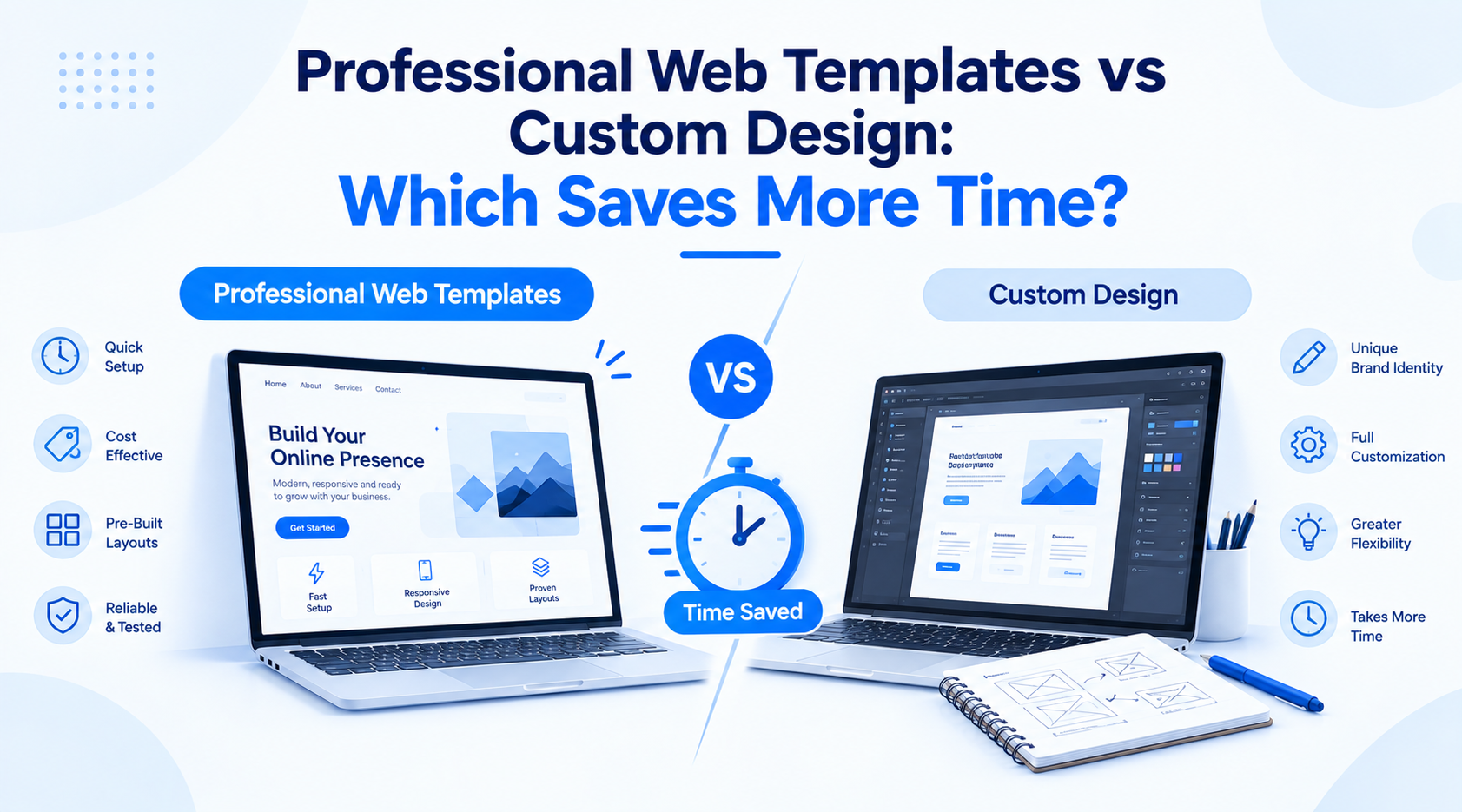
Professional Web Templates vs Custom Design: Which Saves More Time?
A business can launch a website in two days by choosing to buy professional web templates or spend six weeks on a custom build instead. Neither route is wrong; the difference lies in speed, cost, and how closely the final website matches the actual needs of the business, so understanding this difference is important before choosing either path.
Travel businesses feel this decision most sharply, since the booking season rarely waits for a six-week design cycle to finish. Ready-made travel website templates come with itinerary layouts, booking widgets, and galleries already built in, reducing weeks off the timeline. Custom projects take longer, yet they remove every constraint that comes packaged with a pre-built design. Both routes lead somewhere different, and understanding that difference matters before starting.
Understanding Professional Web Templates
Think of a professional template as a website blueprint, built once by a design team and licensed out to hundreds of businesses afterward. The design team creates navigation menus, contact forms, image galleries, and full-page layouts before making them available to the public. A business only needs to add its content, pick colors that match its brand, and adjust a handful of settings.
Browser compatibility, screen size testing, and load-time checks happen long before a template reaches a marketplace. Design flaws surface early, which is precisely why a business without an internal development team benefits from this format. A restaurant chain, a boutique travel agency, and a local law firm all end up choosing from the same pool of pre-tested designs. Fewer surprises during launch and a faster time to a working website.
How Custom Web Design Works
A custom project has no starting template, no borrowed layout, and nothing inherited from another business. A development team maps the architecture from a blank page, designs individual screens, then builds functionality around whatever the business specifically requires. The team shapes every aspect of navigation, checkout flow, and account dashboard by hand, rather than pulling them from a library.
That freedom costs time. Wireframes, design reviews, and several testing rounds happen before anything reaches production. Membership portals, unusual booking logic, and specialized dashboards—these become possible precisely because no existing template limits the design's direction. More control simply means a longer runway before launch.
Templates vs. Custom Design: Time Comparison
Numbers tell the story clearly here. A template-based website often goes live within days. The template already has working navigation and functionality built in. Launch doesn't wait on development. What remains is content entry and minor styling, not structural work.
Custom timelines stretch further. A simple custom build takes a few weeks; a complex platform takes several months. One industry study found template-based launches to be nearly 60 percent faster than custom builds started from zero. For a business chasing a challenging deadline, that percentage decides whether the launch date holds or slips.
When Are Web Templates the Better Choice?
Speed and budget outrank customization for certain projects, and templates fit neatly into that category. A business needing standard functionality, not unusual features, rarely gains anything by paying for a custom build.
Where Templates Fit Best
● Seasonal campaigns requiring rapid deployment
● Small businesses with standard functionality needs
● Startups validating an idea before major investment
● Travel agencies needing structured booking and itinerary layouts
Testing a market idea works well through this approach too. Launching early gives a business real visitor behavior to work with, rather than relying on assumptions made before anyone has seen the website.
When Custom Design Makes More Sense
Custom design costs more and takes longer. It pays off when a template stops fitting what the business actually needs, unusual booking logic, a brand chasing a sharper edge, or growth plans a stock design was never built to handle.
Where Custom Design Fits Best
● Businesses requiring unique booking or membership systems
● Brands establishing a highly distinct market identity
● Platforms expecting significant future scaling
● Projects requiring integrations beyond standard template capability
A business with a clearly defined identity often struggles to fit that identity into a generic structure. Building the website entirely around that identity, rather than adapting an existing one, tends to leave a sharper, more consistent impression on customers.
Choosing the Right Approach for Your Website
Three factors settle the decision: project goals, budget, and available time. A travel agency racing toward peak season gains more from a ready-made booking layout. A company seeking to differentiate itself in the market may need architecture built specifically around a single customer journey.
Hosting deserves equal weight in this decision. MilesWeb, for instance, bundles free professional email accounts and daily backups into its hosting plans, adding real value regardless of which website approach a business lands on. That support matters most once the website goes live and needs ongoing upkeep.
Final Thoughts
Templates and custom design solve different problems, and neither one wins by default. A business under deadline pressure benefits from a ready-made structure. A brand pursuing a specific identity needs more design room than a template allows, and a custom build provides that. The decision should rest on the project itself, not on which option reads better on paper.
Hosting quality determines how well either option holds up after launch. MilesWeb's hosting plans give both templates and custom builds steady uptime with none of the usual management hassle. Get the purpose right from the start, and the website holds its value for years, not just for launch week.