
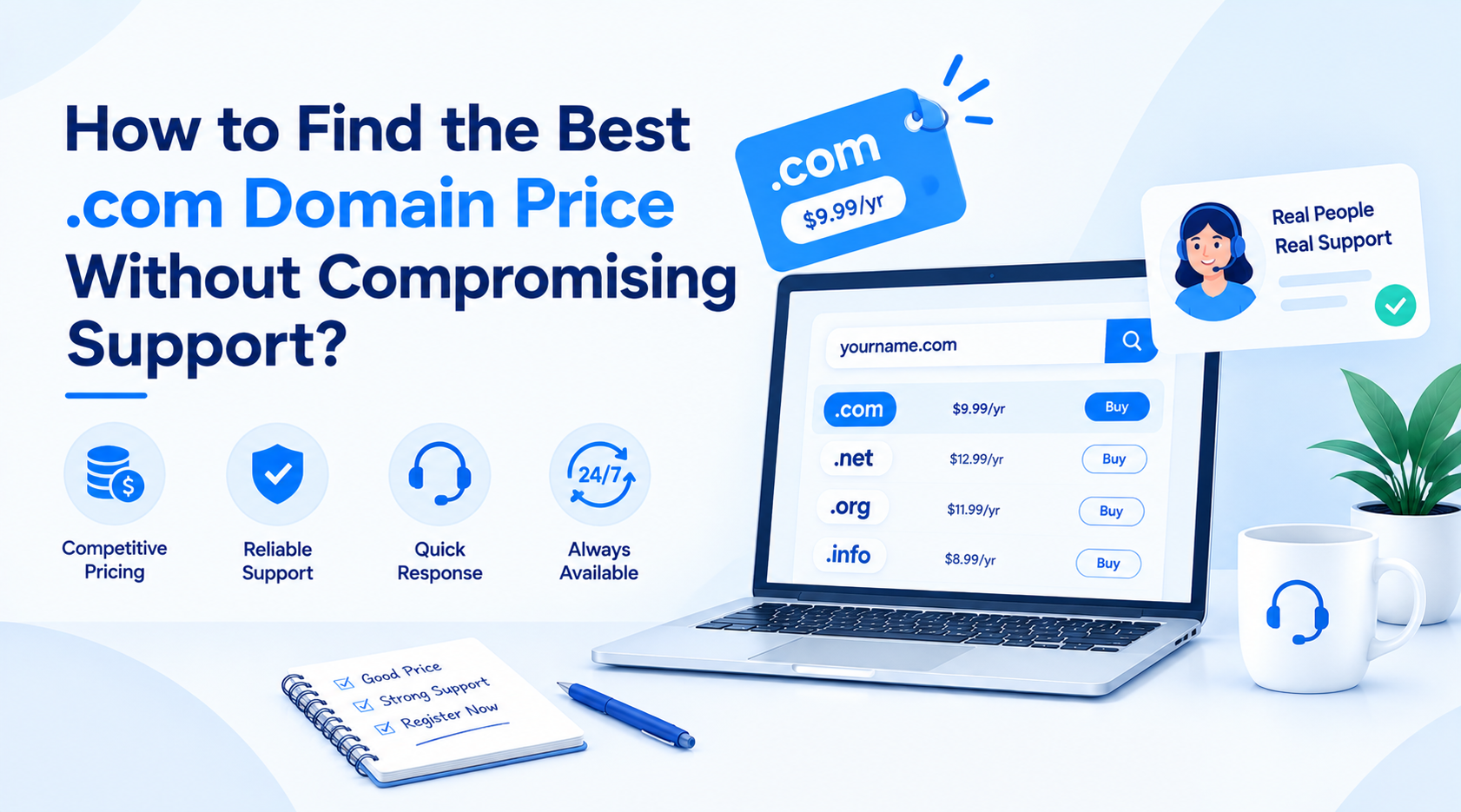
How to Find the Best .com Domain Price Without Compromising Support?
Searching for the best .com domain price for beginners looks like an easy task. Search for the preferred name, compare a few prices, and choose the cheapest option. But the price displayed during registration doesn't always tell you what the domain actually costs over the coming years.
Some registrars use attractive introductory prices, bringing in new consumers, while the renewal price is considerably higher. ICANN advises domain buyers to check renewal fees, terms, and expiration policies before registering a .com domain. At the same time, choosing the lowest price doesn't mean sacrificing customer support, security, DNS management, or domain transfer ability.
Compare the Renewal Price
It makes one registrar appear cheaper than another because of a low introductory price. But if you want to keep your domain for a few years, then the renewal price is usually more important than the first discount.
For example, a registrar offers heavily discounted first-year rates and then charges a substantially higher standard renewal rate. Another registrar may offer a smaller discount but a predictable renewal price. ICANN specifically notes that promotional registration prices can be lower than the subsequent renewal cost.
Calculate the Cost for Multiple Years
Instead of comparing only what you pay today, estimate what the domain will cost over two or three years.
For example:
TCO = Initial registration + renewals + optional services
A simple calculation shows that a domain that costs a little more to register is cheaper in the long run. Also check whether taxes are added at checkout, along with other optional features like privacy services or transfer fees. A transparent pricing structure makes it easier to compare registrars fairly.
Check What Is Included with the Domain
Two registrars offer similar .com prices while providing very different packages.
One includes domain privacy, DNS management, forwarding, security features, or other useful services at zero additional charge. Another may charge separately for some of these features.
The cheapest headline price is therefore not always the best value. Look at the complete package rather than comparing one number.
Don't Sacrifice Customer Support for a Lower Price
Domain problems could become urgent. A DNS configuration mistake, failed renewal, account access problem, or domain transfer issue can potentially affect the website and business email.
This situation is where support becomes part of the value you receive from a registrar.
Before choosing a provider, check how customers can contact support and when it is available. Seek options such as live chat, ticket support, phone support, or a well-maintained knowledge base, depending on requirements.
Check Domain Security Features
A domain is more than a web address. It controls the website access, business email, and other online services.
Before choosing a registrar, check with the available security features. Depending on the provider, these include 2FA, domain locks, DNSSEC, account security controls, and alerts. Security becomes especially essential for the business domain because unauthorized access allows attackers to make changes in DNS to attempt domain transfer.
Understand the Transfer Policy
You may not stay with the same registrar forever. Your pricing requirements may change, but business may consolidate domains, or you may simply prefer another provider.
That makes domain transfer policies essential.
Check whether the registrar clearly explains its transfer process, associated fees, and any applicable restrictions. ICANN notes that registrants have rights and responsibilities related to transferring and domain registration management.
A qualified registrar should not make you feel trapped simply because you registered a domain at a promotional price.
Compare Support Based on Your Needs
Not every domain owner requires the same level of technical support.
If you are an experienced developer managing several domains, you may primarily care about the good control panel, DNS tools, automation, and transparent documentation.
A first-time website owner values live support and step-by-step guidance much more.
Therefore, don’t simply ask, “Does this registrar provide support?” Ask whether its support model matches your technical experience and business requirements.
The right balance is a registrar providing enough assistance when you need it without forcing you to pay significantly more for services you never use.
What Is a Good .com Price?
There is no single universal “best” .com price because registration and renewal prices vary by registrar, region, promotions, taxes, and included services. Current 2026 pricing comparisons show substantial differences between first-year and renewal rates across registrars.
Don’t just compare the cheapest price — compare the cost effectiveness over the length of time you expect to be claiming domain ownership. When building out a business website, concentrate on renewal pricing and support services instead of the introductory promotional discount.
Conclusion
Selecting a low-cost.com domain does not imply the least cost you observe on a registration page. The first year will be attractive with promo pricing but it’s the renewal costs and any additional services that will determine what you might actually spend over time.
It’s better to compare the registration price, renewal cost, included features, security, transfer policies, domain management tools and customer support all in one go. So, the cheapest option isn't always the best deal. Transparent pricing, reliable support, solid domain management and enough security for the price you pay.